

Our Approach to A/B Testing Email Collection
In this article, we outline three key aspects of email collection that we typically test, along with a framework for email collection touchpoints.

Email collection is, from our perspective, one of the key initiatives in eCommerce marketing. Once you have a customer’s email address, you gain access to an additional communication channel through which you can engage with that customer directly. This reduces your reliance on paid retargeting and gives you more control over how and when you communicate.
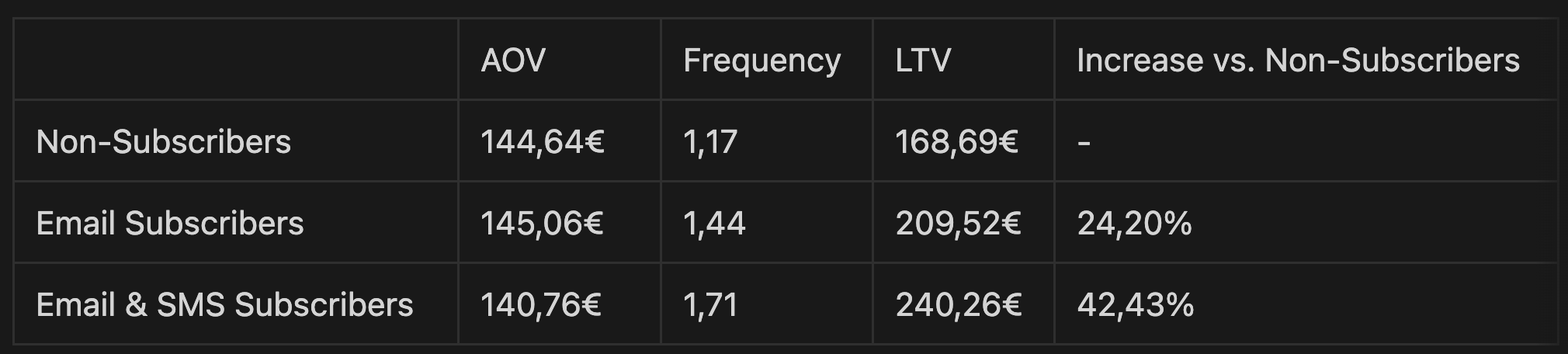
Additionally, when we conducted an analysis comparing the lifetime value (LTV) of customers who were subscribed to email (and SMS) marketing with those who were not, we observed dramatic differences between the two groups. These results are illustrated in the table below.
If I personally ran an eCommerce store, email collection would be one of my top marketing priorities—primarily for the reasons outlined above. There are additional benefits as well, such as building a strong digital identity, which brings significant long-term value on its own.
In this article, we will explain how we typically approach email collection—starting with placement, and then moving on to how we A/B test different elements of email collection. These elements can have a major impact on the total number of emails collected. We will also share specific client examples along the way.
So, without further ado, let’s dive in.
Email Collection Funnel
The funnel is a well-known concept in the eCommerce space. A classic eCommerce funnel starts with website visitors visiting the home page at the top, then narrows down to users who view a product, add an item to their cart, and ultimately place an order.
Email collection tactics can be mapped onto this eCommerce conversion funnel, which helps visualize all the opportunities to ask a website visitor for their email address.
Different email collection tactics are better suited to different touchpoints within the funnel, although some tactics—such as exit-intent pop-ups—can be effective across multiple stages. Even in these cases, however, you can still leverage the context in which the tactic is triggered. For example, an exit-intent pop-up shown on a product detail page (PDP) can reference the specific product being abandoned (e.g., “Here’s $10 off Product X”), whereas an exit from the homepage typically requires a broader message.
As a visitor moves deeper into the eCommerce conversion funnel, email collection tactics tend to achieve higher conversion rates compared to those at the top of the funnel. Checkout email collection, for instance, can reach conversion rates as high as 60%. That said, the number of visitors at this stage is significantly lower than at the top of the funnel.
The diagram below visualizes this concept and highlights several email collection tactics commonly used at different touchpoints.
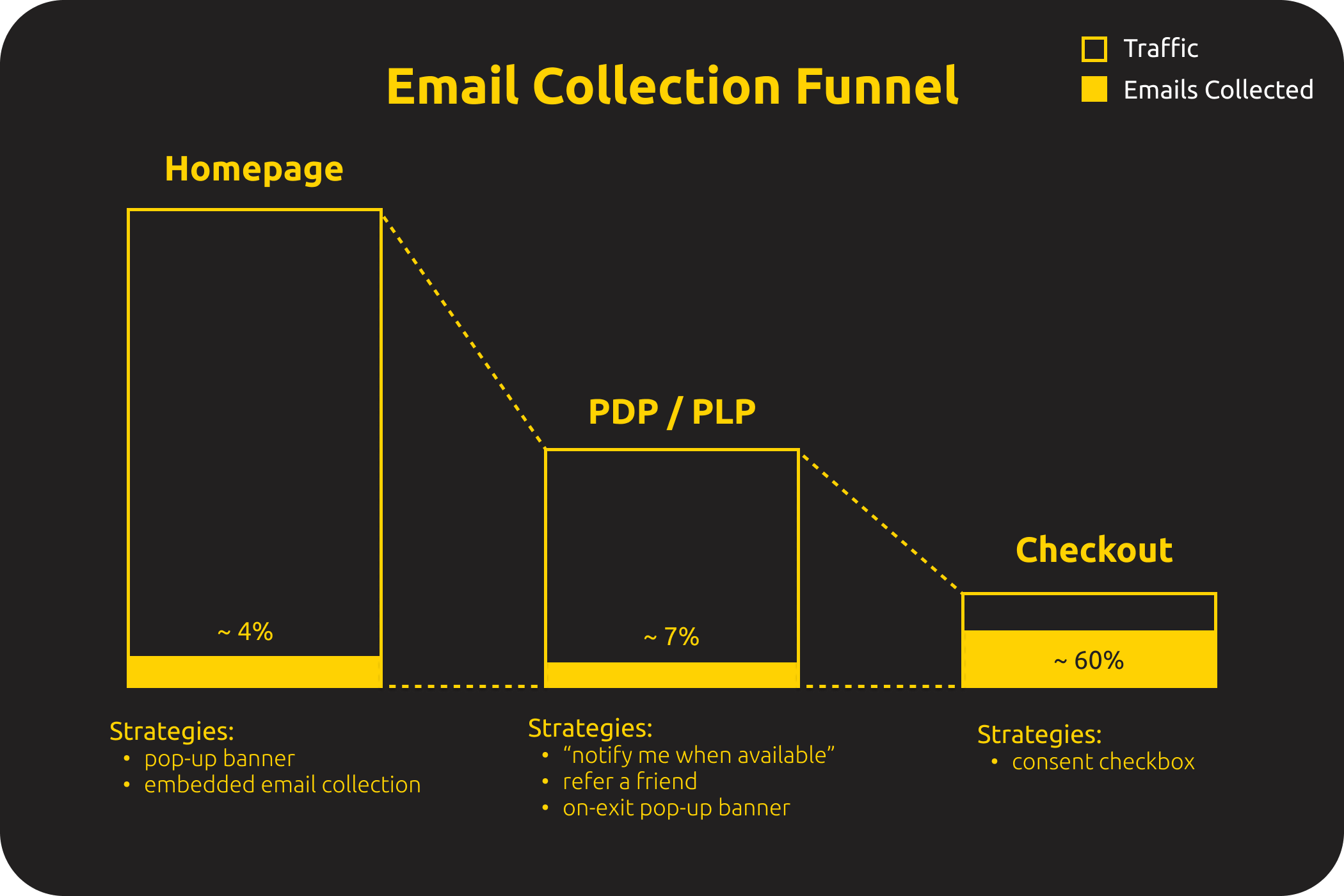
Key takeaways from the graph above:
Checkout is the primary email collection touchpoint for most eCommerce companies, achieving a conversion rate of around 60%.
The homepage typically has the highest traffic, but even well-performing pop-up banners there usually convert at only around 4%.
As visitors move deeper into the eCommerce funnel, email collection conversion rates increase. This likely correlates with higher purchase intent and stronger engagement among users who progress further in the funnel.
Optimising Email Collection Tactics
Let’s say you want to increase email sign-ups on your website. How should you approach this challenge?
First, it’s important to understand that there are several distinct elements you can optimise. Broadly, we group them into three core categories.
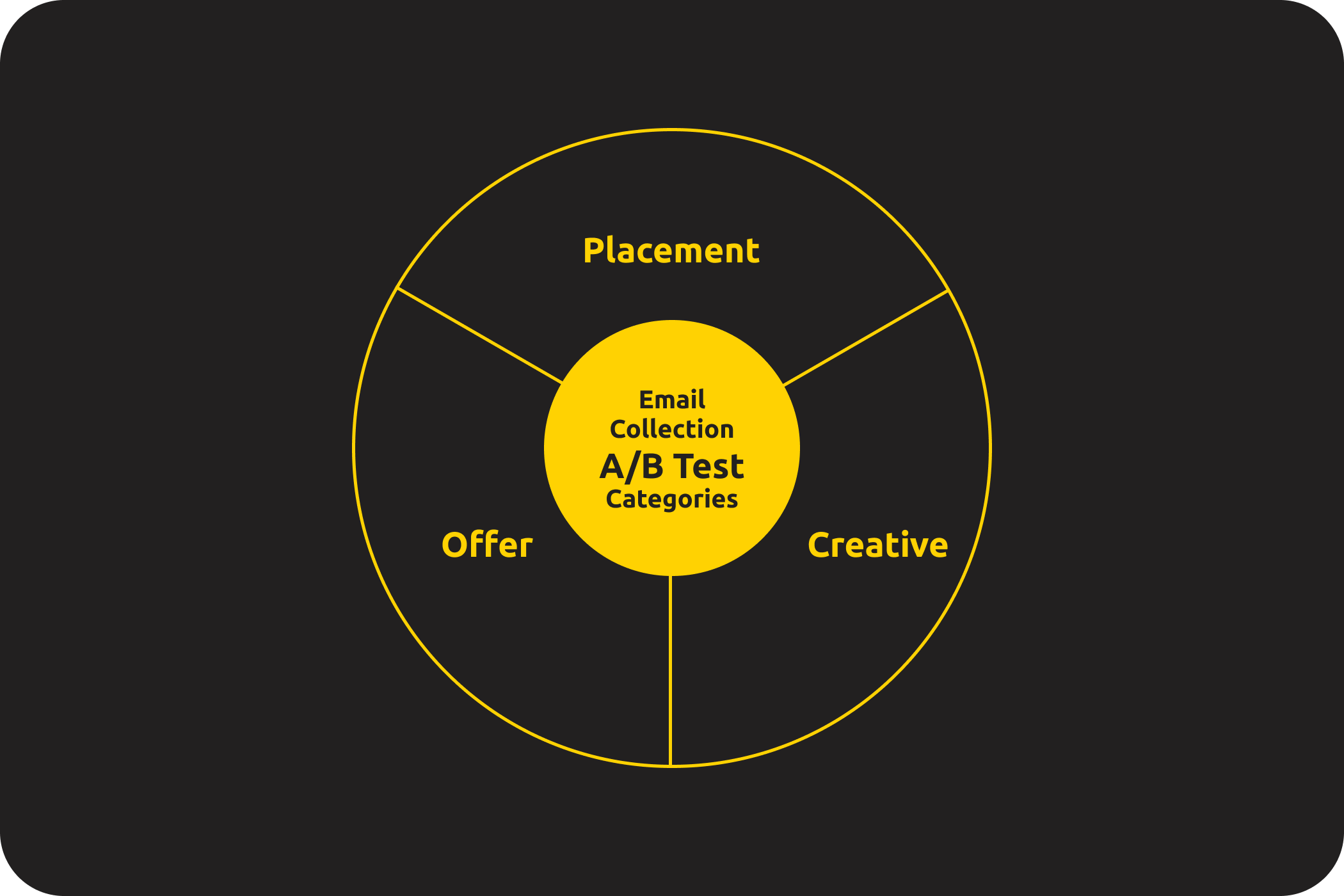
When it comes to email collection, you can optimise:
Placement – Where and how you prompt visitors to join your email marketing list across the website.
Creative – The visual design and messaging of the sign-up prompt itself.
Offer – The value you provide to a website visitor in exchange for their email address. The key question here is: “Why should I subscribe to your newsletter?”
In the section below, we’ll explain what we mean by each of these categories and share examples from past A/B tests we’ve run within each area.
Placement
Where and how you prompt visitors to subscribe to your email marketing list matters significantly.
Below are two examples from different touchpoints that illustrate the impact of placement and timing on email collection performance.
Example 1: Checkout
A Shopify merchant transitioned from a three-step checkout to a one-step checkout. Importantly, they did not change the wording of the consent checkbox or the offer for subscribing to the email marketing list. The only change was the context in which visitors were asked to subscribe.
As a result, their email subscription rate dropped sharply.
We published a separate article explaining why this happened, which you can find below.

Example 2: Homepage Pop-up Timing (A/B Test)
Another example comes from an A/B test that is currently running for one of our clients. The setup is intentionally simple.
An email pop-up banner is triggered on the homepage. The only difference between the two variants is timing:
Variant A appears automatically after 3 seconds
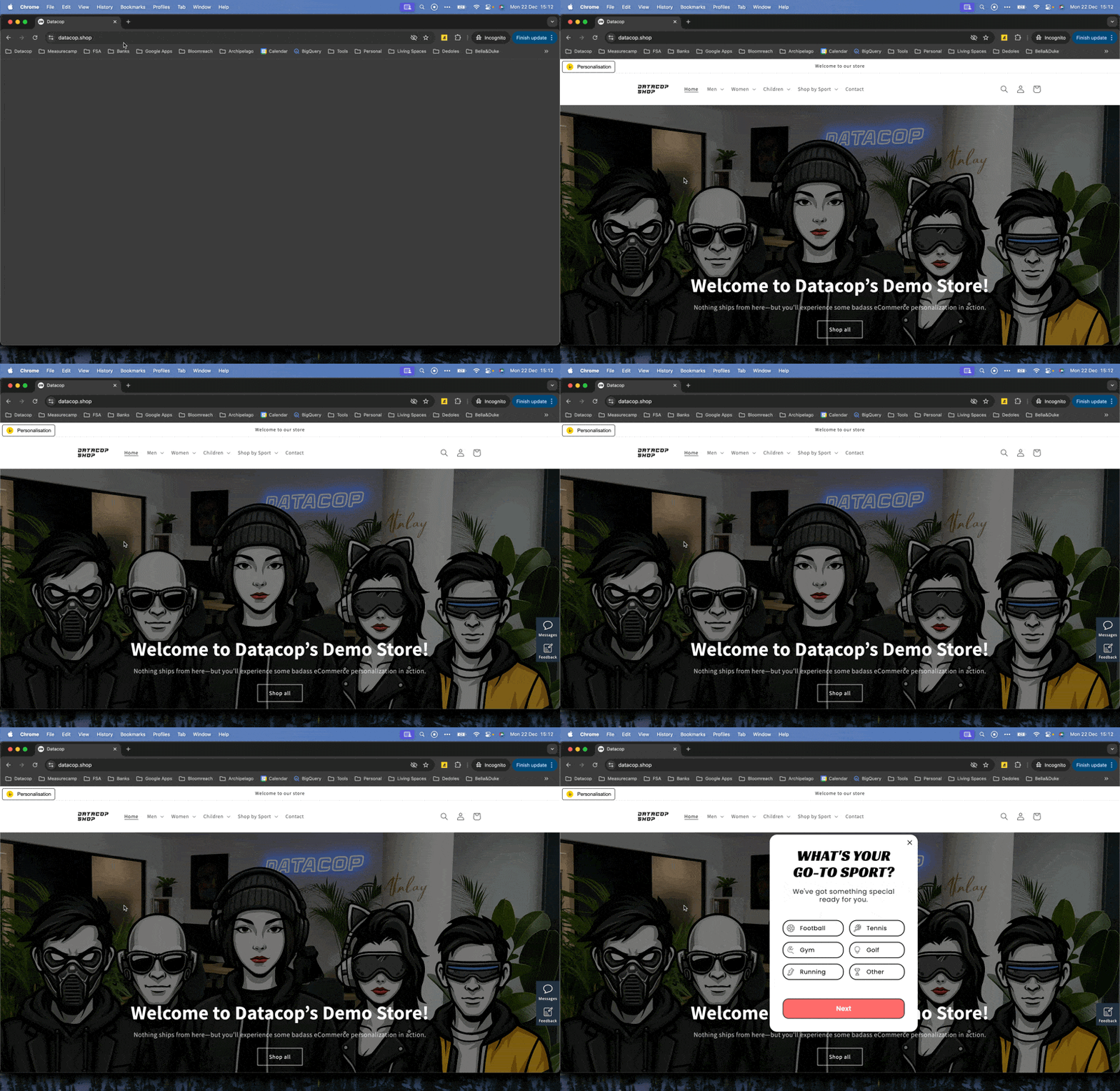
Variant B appears automatically after 5 seconds
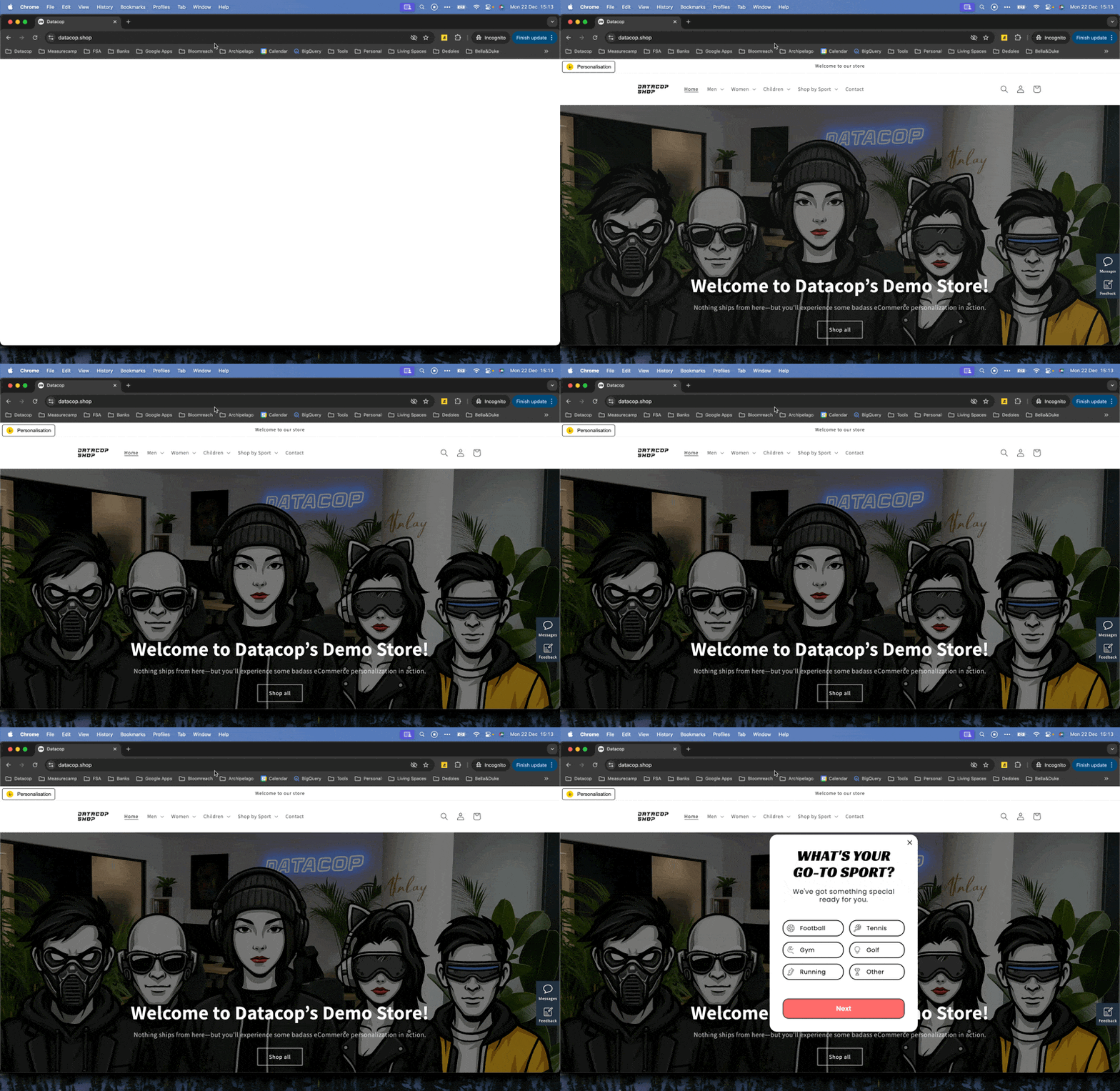
Despite the minimal change, the results are clear:
The 3-second variant collects approximately 15% more email addresses than the 5-second variant.
This demonstrates how even small adjustments in placement and timing can have a meaningful impact on email collection performance.
Offer
The offer defines the value you provide in exchange for a visitor subscribing to your email newsletter.
Common examples of email subscription offers include:
Exclusive benefits – Early access to sales, sneak peeks at new arrivals, or a consistently valuable and engaging newsletter.
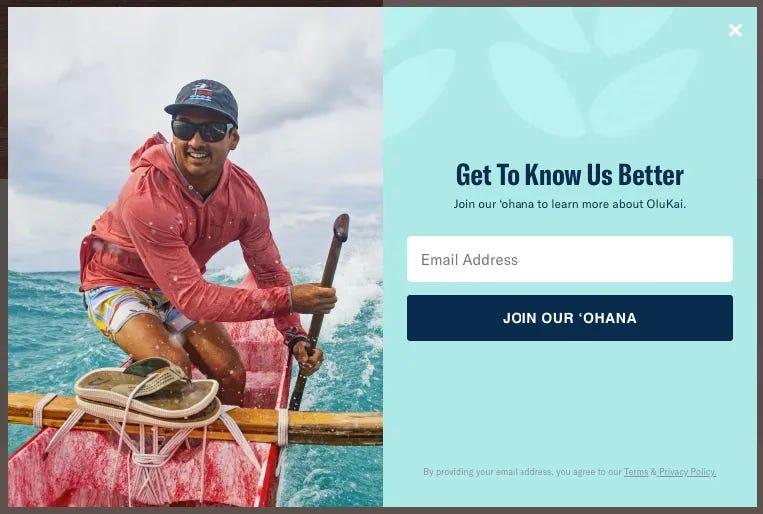
Flat discount – A straightforward discount that applies to all products or services.

Giveaway: Offering visitors the chance to win prizes through contests or daily giveaways.

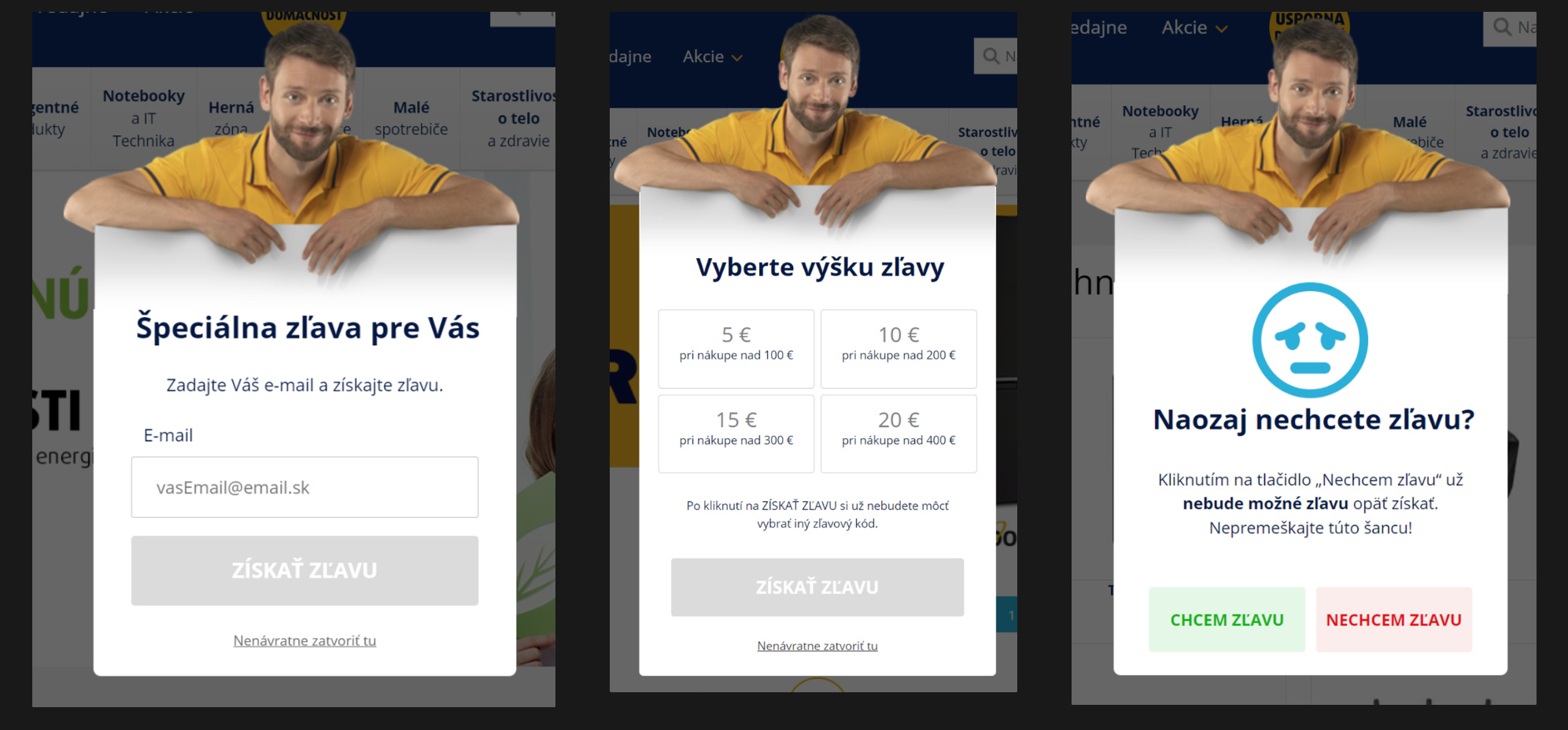
Choose Your Discount: Let customers select from a range of discount options instead of offering a flat rate.
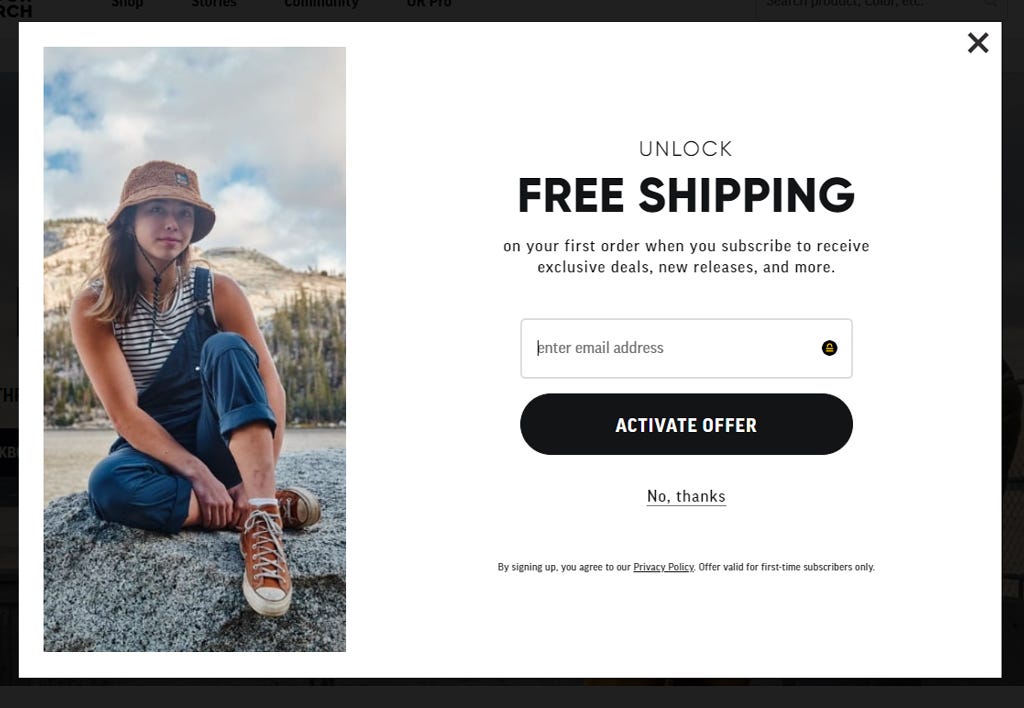
Free shipping – Providing free shipping on the first order for new email subscribers.
Wheel of Fortune: A fun, interactive way for customers to spin a digital wheel and win discounts or prizes.
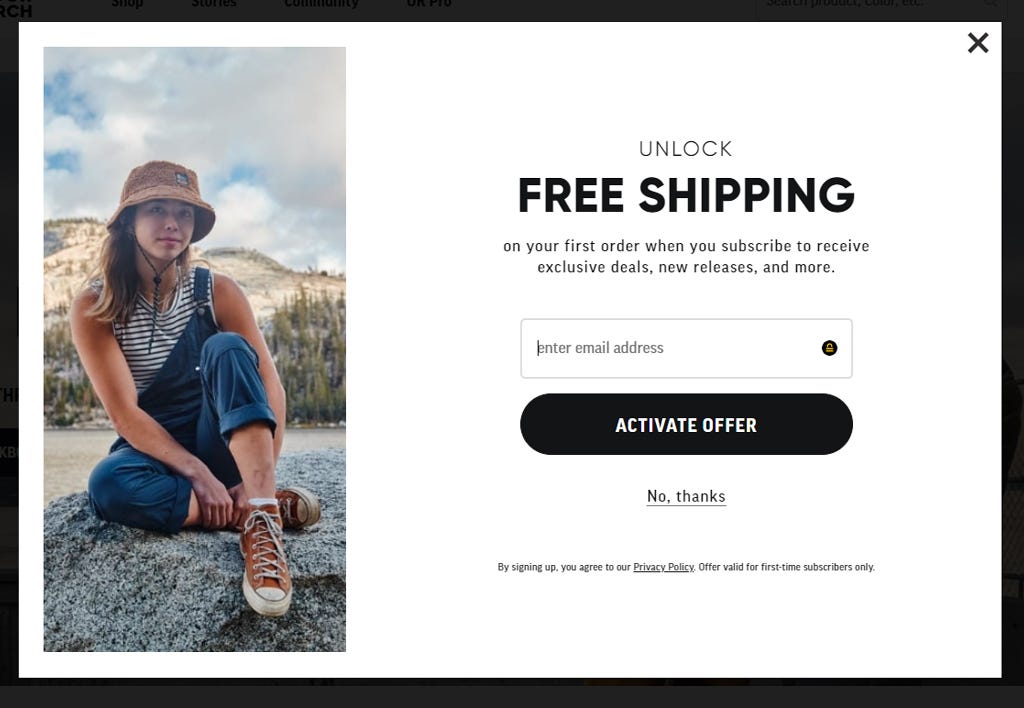
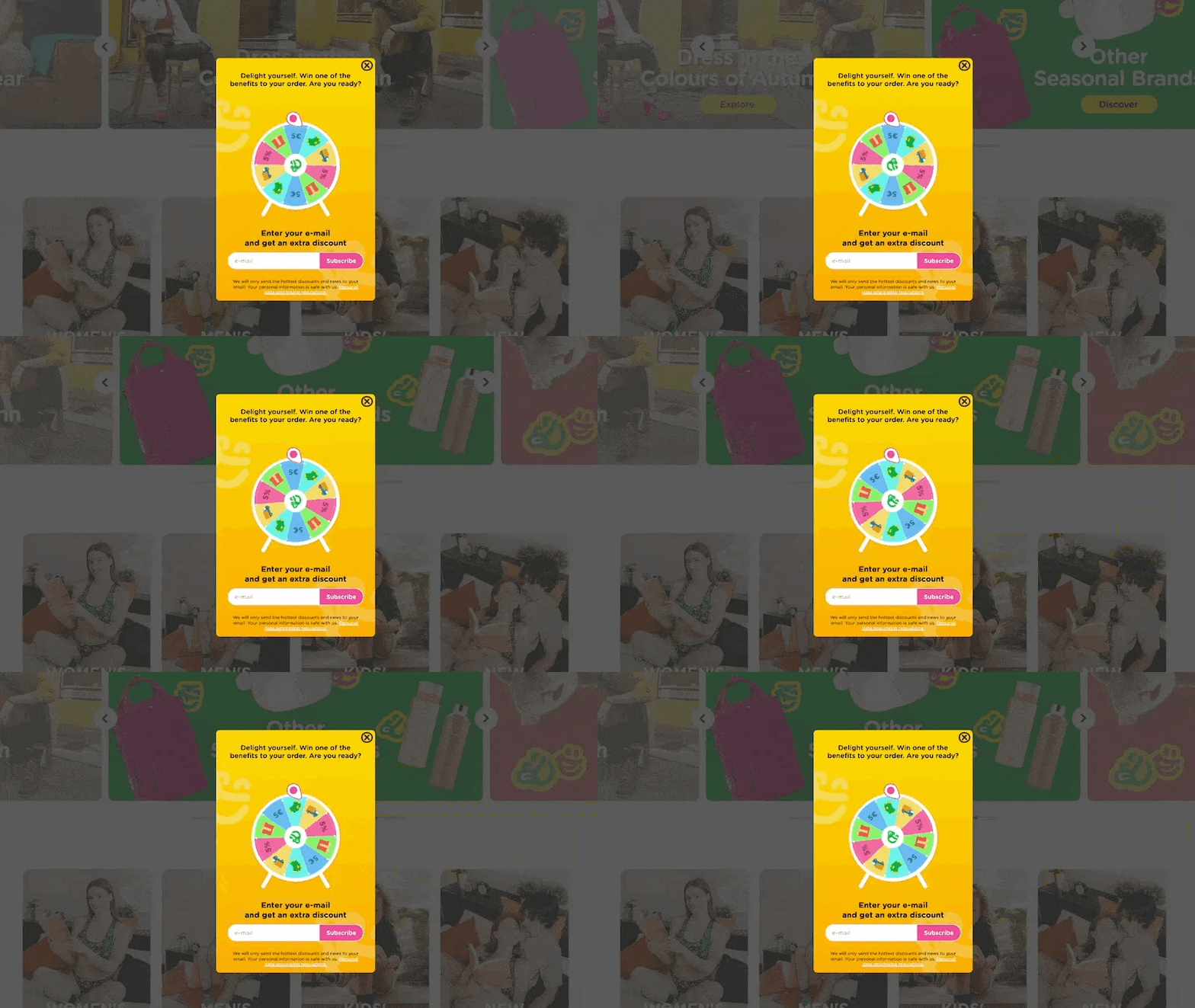
The right offer depends heavily on your brand positioning and business model. For example, if your brand does not offer discounts, a flat discount incentive is not a viable option.
That said, different offers can vary significantly in performance—not just in terms of sign-up volume, but also subscriber quality. In a past A/B test (we can’t share exact numbers), we compared a free shipping pop-up against a giveaway-based pop-up.
The giveaway collected substantially more email subscribers. However, those subscribers proved to be lower quality on average: many users signed up solely for the chance to win, with little long-term intent to engage with the brand.
This highlights an important point: when evaluating email collection tactics, it’s critical to measure subscriber quality, not just the total number of sign-ups.
If you’re interested in how we measure subscriber quality, you can read more about it in this article:

Creative
Creative refers to the wording of your offer and its visual presentation—in other words, how the email subscription prompt looks and communicates value.
We have a few interesting examples that highlight the impact creative changes can have.
The first example involves a simple change to the wording of the email opt-in at checkout. Despite being a minor adjustment, the results were dramatic. You can read more about this case in the article below.

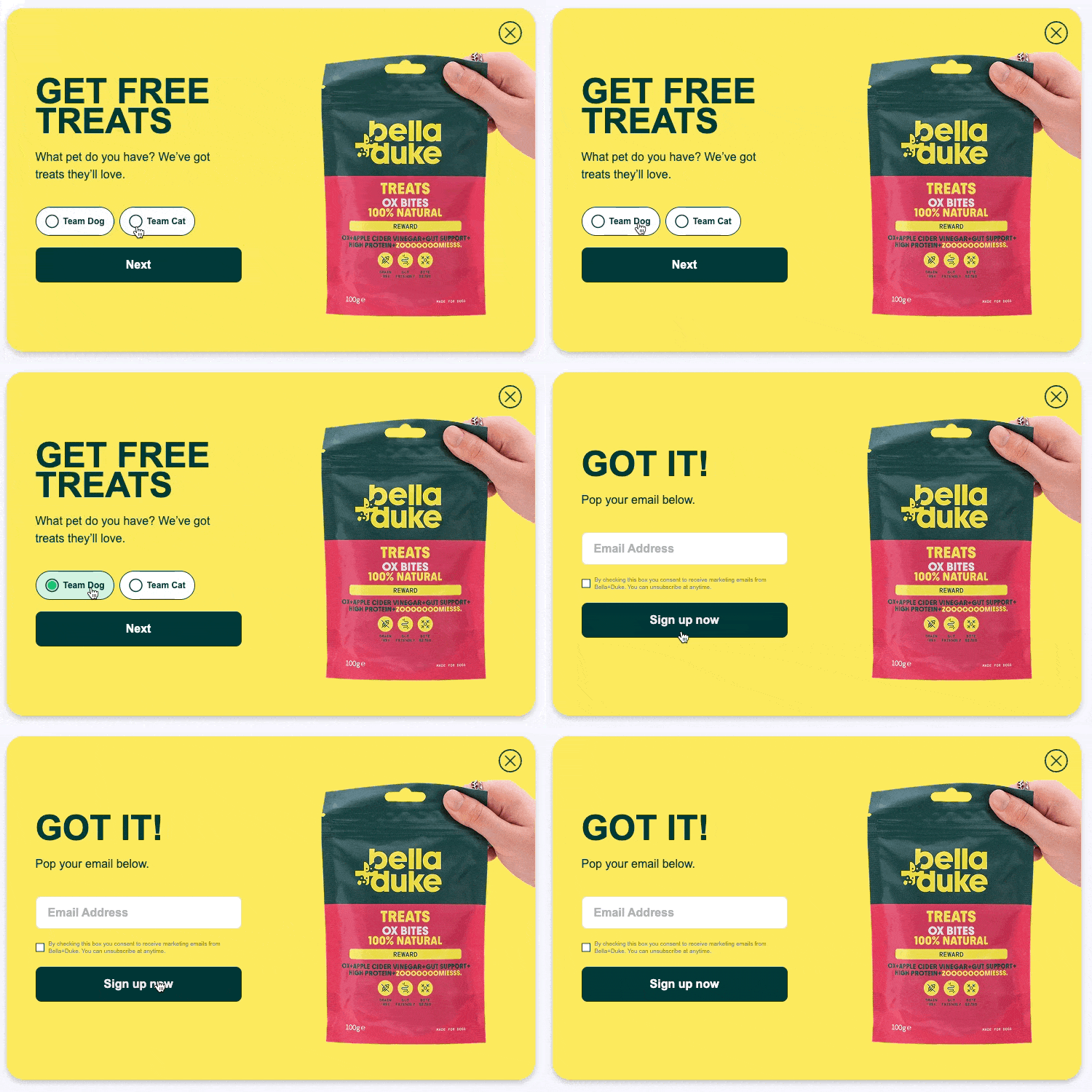
Another example comes from a pop-up banner test. In this case, this creative version:
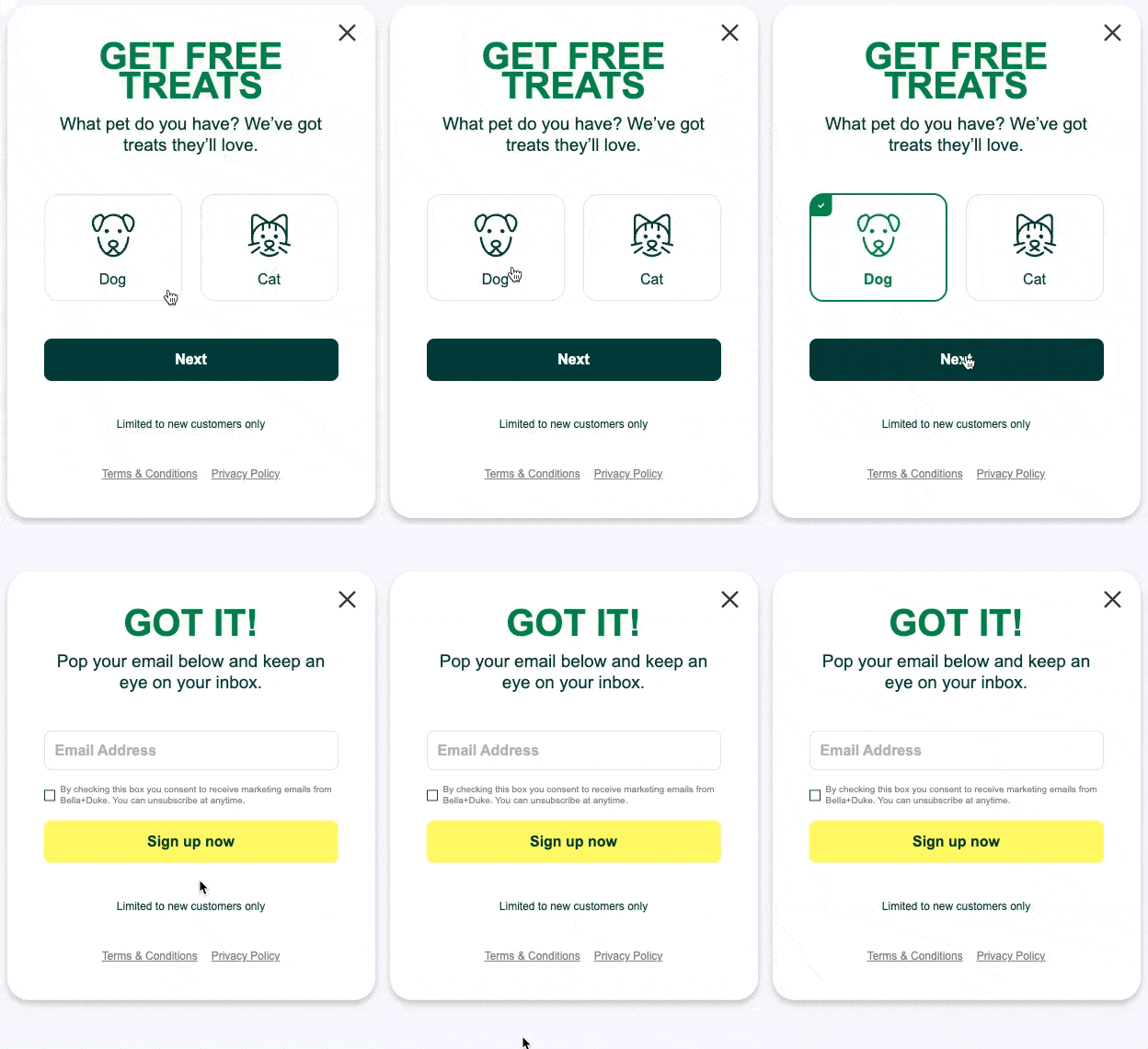
significantly underperformed this version, despite both promoting the same offer:
Final thoughts
As outlined above, email marketing has a significant impact on the LTV of your customers.
Email marketing strategies begin with email collection.
Optimising email collection is, from our perspective, an ongoing process of A/B testing different aspects of email collection. These can be categorised into three broad areas:
Placement
Offer
Creative
To be successful, this process is typically owned by a dedicated team with clearly defined metrics for measuring email collection success or failure. These usually include:
Number of email subscribers
Subscriber conversion rate (how many subscribers made a purchase after subscribing).
Revenue per subscriber
Unsubscribe rate (how many subscribers have already unsubscribed)
If you need help with any aspect of email collection, feel free to reach out by booking a meeting through the link below:
If you found this post valuable…
We hope you found this article valuable. If so, please consider subscribing (for free!) to receive updates on our latest publications.